Capsizing
Not Without HopeCapsizing names the turning state in which Marquis Cooper’s 21-foot Everglades fishing boat overturned and remained afloat in the Gulf of Mexico. It transformed a strenuous recreational fishing trip into a prolonged maritime distress situation: the men entered the water without life jackets, the boat became their only visible refuge, and the overturned hull was difficult for rescuers to distinguish from whitecaps and floating debris. The book treats the capsizing both as a vividly physical reversal and as an accident whose consequences were magnified by failures of preparation, communication, and equipment.
Setting and Conditions
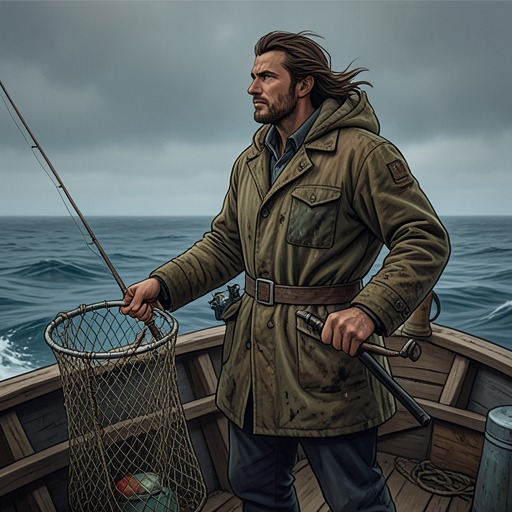
The danger developed in an environment that had initially been framed as a place of abundance and recreation. The Gulf of Mexico is described as more than fourteen thousand feet deep at its deepest point, a major source of United States natural gas and oil, and one of the world’s richest fishing grounds. Yet the same waters that supplied red snapper, grouper, lemon sharks, and amberjacks also exposed four inexperienced boaters to distance, weather, and isolation. Their primary fishing location lay seventy-five miles west of Clearwater, where the water was 150 feet deep and a shipwreck supposedly served as an artificial reef.
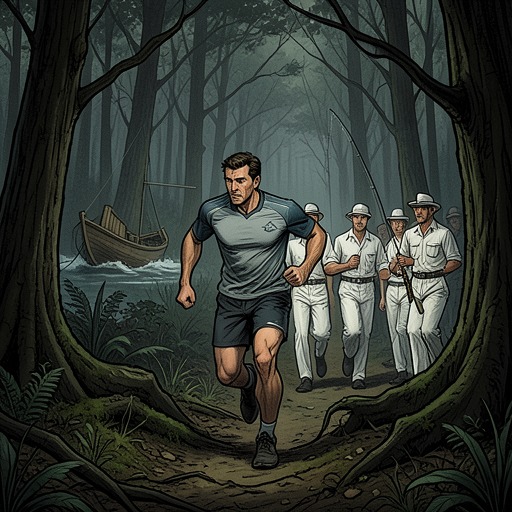
The weather was not wholly unexpected. Marquis Cooper had monitored a cold front and warned that the water might become rough enough to shorten the trip. By the time the men reached the fishing area, the sea was running five or six feet, with waves arriving randomly from different directions. They repeatedly changed positions to absorb the pounding, struggled to anchor, and drifted downwind when the anchor failed to catch properly. Later, the chop increased to seven-foot swells, while Nick Schuyler was already severely seasick and unable to contribute effectively to the difficult work of recovering the anchor.
Mechanical Chain of the Overturning
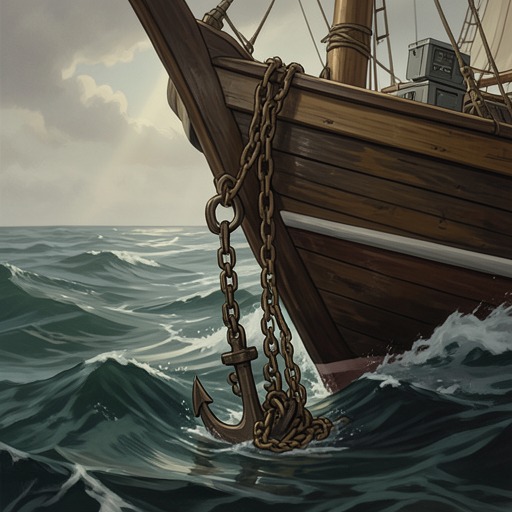
At about 4:15 p.m., Marquis decided that the last fish had been reeled in and that the group should begin the long return to shore. The boat was roughly one hundred yards downwind from the anchor. Will Bleakley and Corey Smith tried to pull the anchor free while Marquis maneuvered the boat around it, but the anchor remained fixed on the bottom. The effort lasted about half an hour, and even the two strong football players could not dislodge it. Marquis had lost an anchor on the previous trip and was unwilling to abandon another one.
Will proposed an improvised solution. Instead of leaving the one-inch anchor line attached at the bow, he untied it and secured it to a cleat at the stern. The plan was to use the engine to yank the anchor loose; if the anchor would not come free, the line might snap or the boat might drag whatever held it. The narrative emphasizes that the men did not fully know whether the anchor was caught on the shipwreck, a cable, debris, or material embedded in the mud 150 feet below. Their uncertainty made the proposed maneuver a high-risk attempt to overcome an unseen obstruction.
Marquis tightened the line and gunned the motor while Will stood at the back of the boat and Corey held the canopy near the center console. The engine first made a high-pitched sound and then a lower rumble. The anchor blades appear to have dug in more deeply rather than breaking free. The stern squatted, water poured into the boat, the bow rose toward the sky, and the hull began to list toward port. The overturning followed almost immediately. There was no time to make a Mayday call, and Nick Schuyler escaped by grabbing the starboard railing and catapulting himself into the water as the boat rolled.
The physical reversal was especially shocking because the boat was large and heavy: a 3,400-pound vessel, more than a ton and a half, suddenly became an overturned platform in seven-foot swells. All four men surfaced within a few feet of one another, but none was wearing a life jacket. The white hull and propeller projected above the water, while hundreds or thousands of bubbles rose as trapped air escaped. Their first instinct was to swim back to the boat and flip it upright, but the capsizing had already changed the terms of survival.
Failed Recovery and Survival Platform
Cutting the anchor line freed the boat from the bottom, but it did not restore the vessel. Will Bleakley and Marquis Cooper cut the rope around the propeller, and the stern rose slightly before the boat began drifting. Corey Smith and Nick Schuyler lay across the stern and kicked downward while trying to pull the hull toward them. Marquis and Will attempted to lift it from the front and then pushed upward from the starboard side. Their strength could not provide leverage: the men sank farther beneath the surface as they pushed, and the submerged center console acted as a large resistant rudder. The attempt did not merely fall short by a small margin; the boat did not come close to flipping back over.
Once recovery failed, the overturned hull became both shelter and trap. It offered the men a surface on which to sit and a target that might be seen by aircraft or ships, but its low profile made it hard to locate. At dawn on March 1, Nick sat on the hull while Will stood on the swim platform or a trim tab. Two friends were already dead, and the survivors had been in the water for about fifteen hours, awake for more than a full day, hungry, thirsty, and exposed to continuing ten-foot waves. The capsized boat therefore functioned as a fragile life raft rather than a restored means of transportation.
The hull also shaped what the survivors could see and fear. They noticed a large squid-like creature beneath the boat and later saw two fins, probably five-foot sharks resembling lemon sharks caught during the fishing trip. The blood leaking from the boat or the loose bait may have attracted them. These encounters connect the overturned vessel to the Gulf’s living environment: the sea was not an empty backdrop but an active field of animals, currents, waves, and drifting materials surrounding the men.
Search, Visibility, and Consequences
The capsizing made the Coast Guard’s search extraordinarily difficult. If the boat remained afloat while overturned, only a fingernail of white hull would be visible among hundreds of thousands of whitecaps. Storm clouds reduced the available light, and the cold front made the sea heave beneath a dark, overcast sky. Searchers also had to distinguish the hull from milk jugs, old rafts, refrigerators, and other debris. From a moving ship, both the terrain and the observer were unstable; an object plainly visible on calm water could disappear in a wave trough only one hundred yards away.
The boat’s lack of an emergency position-indicating radio beacon compounded the problem. Such a device could have transmitted the vessel’s location and identity, either manually or automatically after an overturning. Because the boat sent no distress signal, the search began as a problem of probability: rescuers had to estimate how wind, waves, currents, the boat, and the people might have separated or drifted. The capsized vessel was less visible than an upright boat, while the human beings were influenced differently by current and exposure.
The Florida Fish and Wildlife Conservation Commission later identified three contributing factors: the anchor line had been tied improperly to an eye bracket on the port side of the transom; the men attempted to use forward throttle to pull the anchor free; and they had not left enough slack in the line. Together, these conditions allowed the stern to submerge and caused the boat to capsize. The official explanation preserves the event’s causal sequence without reducing it to one person’s character or one moment of bad luck.
Meaning and Aftermath
In retrospect, the capsizing exposes a series of protective layers that failed at once. The men knew a cold front was approaching but continued toward a distant fishing site. The anchor became stuck, the line was moved to the stern, the engine was used to force the anchor free, and the line lacked sufficient slack. They were not all heavily intoxicated, but they had no Mayday opportunity once the overturning began. They were not wearing life jackets, had no EPIRB, and later recognized that they should have carried more flares and flashlights, communicated their precise destination, and understood where safety equipment was stored.
The event also reverses the meaning of the boat itself. Before the accident, it was a vehicle for abundance, effort, and camaraderie: the men traveled far offshore to catch fish, endured soreness and seasickness, and joked about their inexperience. After the capsizing, the same hull became the narrow boundary between exposure and survival. Its whiteness could attract rescuers, yet blend into the foam; its flotation kept the wreck from sinking, yet its overturned shape denied the men a usable cabin, engine, radio, or easy access to supplies.
For Nick Schuyler, the overturned boat remained inseparable from memory. After the accident, he could visit Indian Rocks Beach and stand near the water, but he did not want to enter it. At the beach he compared its warmth with the cold water of the disaster, then chose a public shower rather than wading in to remove sand. Looking at the Gulf brought back brief images of Marquis Cooper, Corey Smith, and Will Bleakley fighting to survive. Capsizing thus becomes more than the technical name for the initiating accident: it is the permanent shape of the trauma, the moment when an ordinary boat trip turned over into loss, survival, and recurring questions about what might have been done differently.